
Colbert and the psychology of death
(This essay is not about Stephen Colbert. Unless you actually are Stephen Colbert, because reader, this essay is about you)

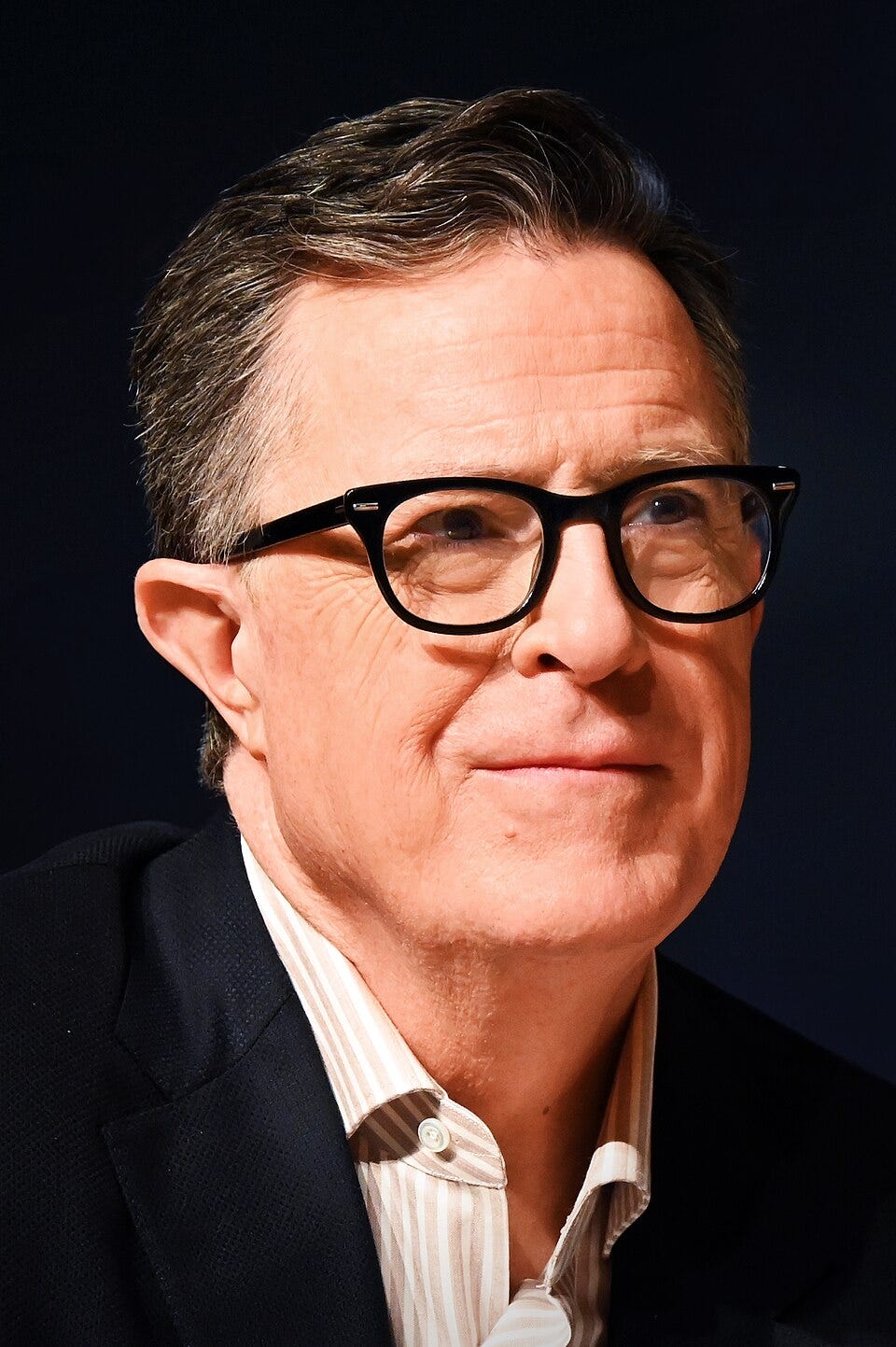
I promise you that this is a true story.
Last night, I dreamed that I had found myself in the midst of an interview with Stephen Colbert. Although the dream did not make it explicit, it seemed like he didn't intend to interview me. I just kind of wandered onto his show and because he was a good sport he let it happen.
Colbert acted like my comments were insightful, although (even while dreaming) I was aware that he was probably just being kind and what I had to say was not really remarkable.
But when Colbert asked me the last question of the interview, I woke up and wrote this essay about my answer.
Colbert asked me about death.
I don't particularly remember why, or the context of his question. But I do remember my answer.
I told him that psychology actually speaks to this. That there's the entire domain of existential psychology that is very focused on the fact that we're going to die.
Human beings really struggle with this reality, and so most the time we try to ignore it, and some of the time we get angsty about it. But existential psychology teaches that also have the option to accept that reality, and when we do, it can tremendously life-giving.
I told Colbert that probably the single biggest difference between who I am today and who I was 15 years ago is my awareness of death. My awareness that tomorrow isn't guaranteed, and that I will always come to the end wishing for just a little more time.
And this of course refers to awareness of the death that brings the end of our physical life, but it also refers to all the little deaths that we experience along the way; all of the chapters of your life that ended, all of the doors that closed that you can never walk through again. The last time your group of college friends gathered before graduation. The last hug from your late grandparent. The last tender memory from the relationship with your ex.
The French call an orgasm le petit mort (“the little death”) and while I've never been quite bold enough to ask a French person why, I imagine that on some level it's because an orgasm is an ending. It brings a sudden exclamation mark, an unavoidable stop to the intimate conversation between lovers (or at least, a pause between sentences.) Even the act that creates life has a little death right at the center; this is the reality existential psychology asks us not to run from.
The point of all this, which I explained to Colbert during this dream,
Is that on the one hand death is not a choice. We will all die one day and we will all suffer these little deaths along the way, and it sucks but we don't really get a say in any of that.
But on the other hand, death invites us to deliberately make the biggest choice we have, which is:
How do we choose to live?
How do you choose to spend today, knowing that you're not guaranteed tomorrow? How do you choose your words in an argument with a loved one, knowing you'll never have quite enough time with them?
Most people fail this choice because they refuse to consciously make it. Most people just kind of drift through today doing what's automatic, doing what's easy, doing what other people expect.
It's so easy to never recognize your power to choose how you live.
Perhaps the real Colbert already knows this. He seems like an existential kind of guy. But I think it's important to talk about because (much like how we forget our dreams after waking) our awareness of death tends to fade away too.
Our minds don't like to think about how finite and fragile everything is. It's scary and it's tragic.
So we tell ourselves that there's no particular rush to do any of the things that matter to us. And then we putter away our time on distractions, coasting on autopilot, until one day we find we've lost something we can never get back.
To be clear, this doesn't mean you need to panic.
You don't need to literally live each day like it's your last. It's ok - good, even - to give yourself permission to stop and rest and waste time on something unimportant. In fact, the Little Prince from The Little Prince would argue that wasting time on the unimportant things of life is how you make them important.
So you don't need to optimize your life, or race around frantically. You don't need to spend every moment perfectly.
You just need to choose.
Remember that you probably have tomorrow. You probably have more time.
But you might not.
And then, knowing that you have some time but not all, plenty
but not quite enough…
What do you choose to do today?
I highly recommend folks read His Dark Materials, for the conversation Lyra has with her Shade of Death, and why she never saw him before.
Thank you for sharing this, and insisting that choosing to meander and choosing to move are the crux, not to shame into freezing or panicking.
Dr. Dan, this was a lovely essay to wake up to.